
Today in 1723
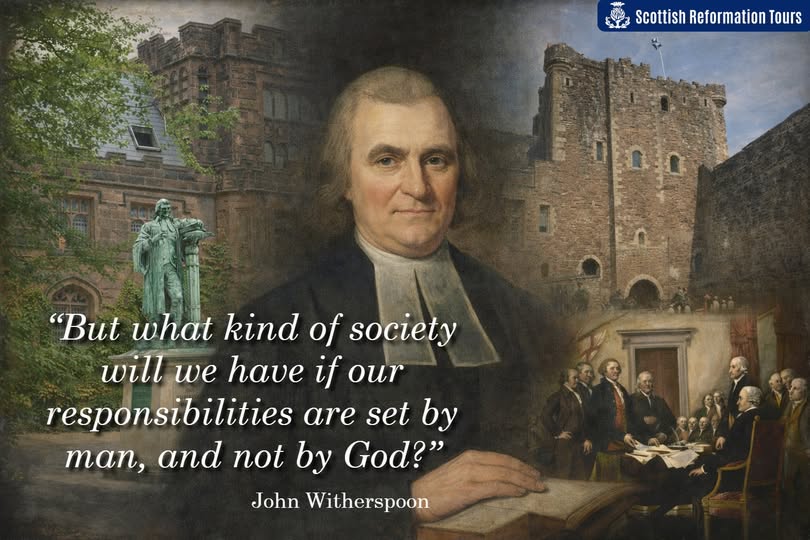
Born on this day in 1723, was a Scotsman who helped give birth to a nation: John Witherspoon!
Witherspoon was born in Gifford, near Haddington, and educated at the University of Edinburgh, where he was shaped by Scotland’s Presbyterian and Enlightenment traditions. Ordained as a Church of Scotland minister in 1743, he quickly gained a reputation as a man of conviction, intellect, and nerve.
That nerve was tested during the Jacobite Rising of 1745. A firm Presbyterian and opponent of the Jacobite cause, Witherspoon was arrested and imprisoned in Doune Castle—where he took part in a bold escape alongside fellow prisoners. (It also happens to be a great stop on our tours.)
In 1768, Witherspoon made a life-changing decision. Leaving Scotland behind, he crossed the Atlantic to become President of the College of New Jersey—now Princeton University. There, he transformed a struggling college into a leading centre of learning, reshaping its curriculum, stabilising its finances, and educating a generation of future American leaders.
As the American colonies moved toward revolution, he threw his weight behind independence. In 1776, he signed the Declaration of Independence, becoming the only active clergyman to do so—a striking symbol of how deeply Presbyterian ideas of liberty, conscience, and resistance to tyranny had crossed the Atlantic.
Until his death in 1794, Witherspoon remained a towering figure in education, politics, and theology, and a passionate advocate of Scottish emigration to America. From a parish in East Lothian to the founding of a nation, his life is another reminder of Scotland’s influence on world history.