
George Gillespie
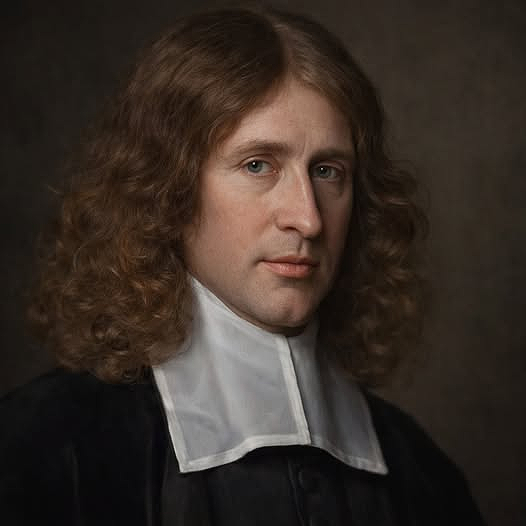
Some 17th century portraits are so good that with only slight adjustments, modern technology can give us a much better idea of what these historic figures actually looked like.
One example is the man pictured here, George Gillespie, who was born on this day, 21st January 1613. A man who isn’t as well known in Scottish history as he deserves to be. But the famous Samuel Rutherford, writing to Gillespie shortly before his death said that he “had done more work for his Master than many a hundred grey-headed and godly ministers.”
Gillespie was a Covenanter who died young, only 35, yet he packed an extraordinary amount into his short life.
In the aftermath of the Prayer Book riots of July 1637, and before he was even ordained, he published his “Dispute against the English Popish Ceremonies obtruded upon the Church of Scotland”. The Scottish Privy Council ordered every copy to be burned, an attempt at suppression that only helped spread the book further.
He became minister of Wemyss in 1638 and was among the first inducted without acknowledging the bishops. A staunch defender of Presbyterianism, he preached at the famous Glasgow Assembly in November 1638, helping to shape the direction of the Church at a decisive moment.
Gillespie went on to serve with the Covenanter force that crossed into England in 1640, and later acted as one of the Scottish commissioners involved in negotiating peace. Remarkably, he even preached before Charles I at Holyrood in September 1641.
Two years later he was sent as one of Scotland’s commissioners to the Westminster Assembly, and was the youngest member there. Youth was no barrier to him. His learning, sharp reasoning, and confident debating led his colleague Robert Baillie to call him “that brave youth.” Gillespie laboured tirelessly in the Assembly and contributed significantly to the work that flowed from it. He later presented the Confession of Faith to the General Assembly in Edinburgh in August 1647, and helped secure its ratification.
In 1648 he was appointed Moderator of the General Assembly in Edinburgh, and his ability impressed many. William, Earl of Glencairn, declared, “there is no standing before this great and mighty man.” Yet by then his health was failing, and on 17 December 1648 Gillespie died.
The closing lines of his memorial in Kirkcaldy capture the man in full. It says he was: “Deep in intellect, gentle in disposition, sharp in debate, fluent in speech, unconquered in courage. He drew the good into love, the wicked into envy, and everyone into admiration of him”.