
National Covenant
Yesterday marked another landmark anniversary in Scotland’s church history. It was the day the National Covenant was begun.
By the late 1630s, tensions were boiling over. Scottish Presbyterians believed their faith was under attack, provoked by fierce disputes around the bishops, the Book of Canons, and the Book of Common Prayer. If these changes took root, they feared Scotland’s church would be steered away from Presbyterian worship and governance—and back toward the kind of Roman Catholic influence they had long resisted.
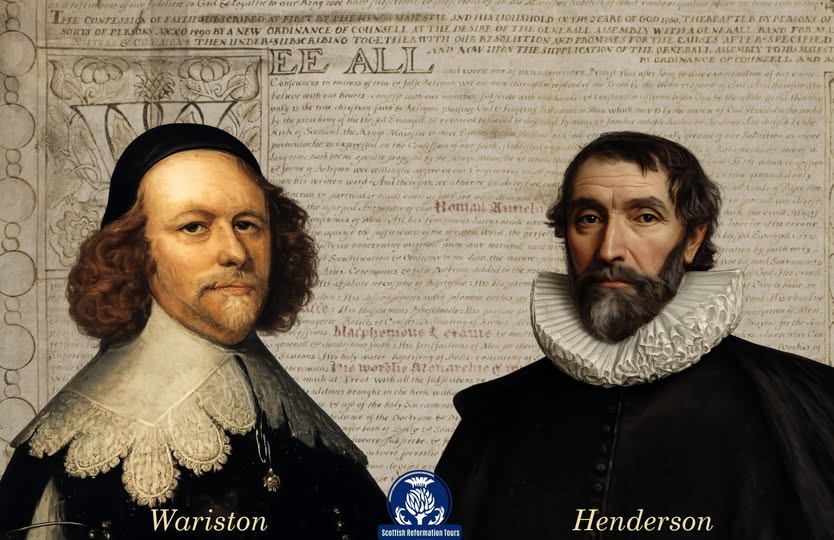
So, on the 22nd February 1638, two men were entrusted with a bold mission—to draft a document strong enough to unite the nation in defence of its religion. One was Alexander Henderson, a minister with a sharp mind and an instinct for what would move ordinary people. The other was Archibald Johnston of Wariston, a lawyer whose pen could give religious conviction the force and precision of law.
Their solution was both strategic and symbolic. They decided to revive an earlier pledge known as the “King’s Confession” of 1580—a statement originally signed by King James VI in response to anxieties about Catholic influence during his youth, and then signed across Scotland the following year. By renewing it they were saying “We are not inventing something new. We are repeating what Scotland already swore before.”
That matters because the whole Covenant is trying to sound like renewal, not rebellion.
But they didn’t stop there. The renewed confession would include that full original text—then be strengthened with two new sections: a legal defence, written by Wariston and a practical application, written by Henderson.
Together, these three parts became what history would remember as the National Covenant—So a simple way to understand the Covenant is that it has three parts:
First: the 1580/81 Confession repeated word for word.
Second: a long section that lists old laws and Parliament acts in favour of the reformed faith.
Third: the new 1638 promises, where people commit to resist the recent changes and stand together.
So it’s: old confession, legal argument, new pledge..
It would soon be signed with extraordinary drama and public resolve at Greyfriars just six days later.
And even on the day Henderson and Wariston began their work, the momentum was already building. An advertisement was published and sent throughout the country, calling on “all who loved the cause of God” to come to Edinburgh—not as spectators, but as participants in what they saw as a national reformation.