
On this day, 23 July 1637
As part of our week-long tour, our group were exploring Edinburgh today, and one of our stops was the historic St Giles’ Cathedral. And our visit fell on the anniversary of one of the most significant events in Scotland’s Reformation and Covenanter history.
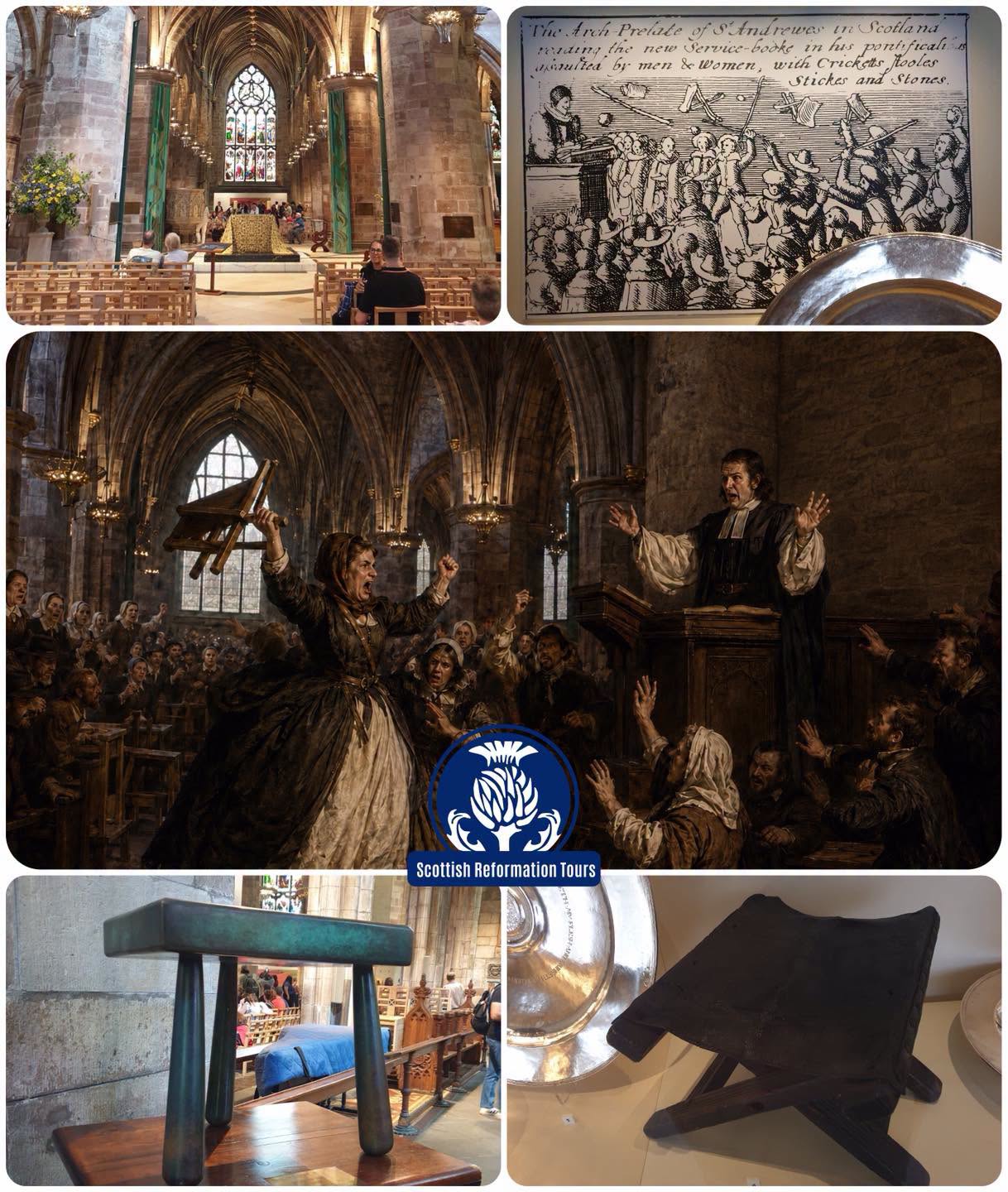
On 23 July 1637, worshippers gathered in St Giles’ Cathedral, Edinburgh, where Dean James Hannay attempted to use the new prayer book for the first time.
According to the famous account, a woman named Jenny Geddes was so outraged by what she heard that she seized the stool she had been sitting on and hurled it towards the dean’s head, crying:
“Villain, dost thou say mass at my lug?”
Her dramatic protest was followed by uproar. Others began shouting and throwing stools, and a riot broke out inside the church before the protesters spilled into the streets of Edinburgh.
The new Book of Common Prayer—often known as “Laud’s Liturgy”—had been prepared by Scottish bishops under the influence of Archbishop William Laud and King Charles I. Scotland’s Presbyterian ministers had been given no involvement in its preparation or approval.
Many believed that the prayer book contained serious Roman Catholic errors. Its communion service appeared dangerously close to the Catholic Mass, while it also required readings from the Apocrypha and the observance of saints’ days.
For many Scots, this was the final provocation after years of unwanted changes being imposed upon the Reformed Church of Scotland.
The following day, the Privy Council, which governed Scotland on the king’s behalf, forbade people from speaking against the government or the prayer book under severe penalties. Yet the strength of public opposition forced the authorities to suspend its use until King Charles I could be informed of the growing crisis.
Petitions and protests soon flooded into the Privy Council. The prayer book was condemned not only for its alleged errors, but because it had been forced upon the Church without the approval of a free General Assembly or the Scottish Parliament.
Within months, the National Covenant would be drawn up and signed at Greyfriars in Edinburgh.